All-age professional curiosity rapid read practitioner briefing
What is professional curiosity?
- Professional curiosity is having a healthy scepticism about what you are being told by the person you are speaking to, or a situation, and how this relates to safeguarding related issues across all ages.
- It is about using all your communication skills to explore and understand what is happening to an individual or within a family rather than making assumptions or accepting service users’ versions of events or disclosures at face value.
- Another way of saying professional curiosity is saying that as a practitioner you are using ‘respectful uncertainty’
Why is professional curiosity important?
- Developing and maintaining a sense of professional curiosity is vital if practitioners are to work together to keep children and adults safe.
- A lack of professional curiosity is identified regularly in adult and child safeguarding learning reviews
- Being professionally curious enables opportunities to identify less obvious indicators of vulnerability or protective factors.
- It is a mindset that allows us to gather relevant information and understand the risks an individual may be facing from their perspective.
- It prevents assumptions being made when assessing an individual or families’ needs and safeguarding risk thus reducing incorrect information being shared so the right level of support and intervention can be offered.
- It also allows us to understand the cumulative impact of multiple or combined risk factors, e.g. domestic abuse, drug and/or alcohol misuse, and mental health issues so we can identify if we need to refer onto other agencies including social care or specialist teams.
Professional curiosity and language
- Professional curiosity is often described as a key safeguarding skill, yet it is increasingly becoming a ‘buzz word’ - used frequently but not always fully understood in practice. The language we use to define and discuss professional curiosity is therefore vital. We must ensure that it is accessible, inclusive, and culturally sensitive.
- In many organisations, a significant proportion of the workforce are internationally trained professionals for whom English is not a first language. As such, it is important that training, policies, and practice materials are delivered using clear, straightforward language, avoiding unnecessary jargon.
- Professional curiosity should not be reduced to abstract or academic terminology. Instead, it should be framed in a way that is grounded in practice, tied to the professional's roles, responsibilities, and ethical duties, and sensitive to cultural beliefs, values, and communication styles.
- Encouraging terms like “respectful questioning”, “curious practice”, or “compassionate enquiry” may help in translating the concept into more practical and culturally meaningful language, especially for staff who are new to safeguarding in a UK context.
- Ultimately, the aim is to ensure that every professional understands not only what professional curiosity means, but also how to apply it confidently, respectfully, and appropriately in their everyday interactions - regardless of their background or first language.
What works well in being professionally curious?
It is a combination of looking, listening, asking questions, and checking and reflecting on information received. It means:
- Testing out our professional hypothesis and not making assumptions
- Triangulating information from different sources to gain a better understanding of individuals and carers functioning
- Getting an understanding of individual’s history, which in turn, may help us think about what may happen in the future
- Obtaining multiple sources of information and not accepting a single set of details we are given at face value
- Having an awareness of our own personal bias and how that affects how we see those we are working with
- Professional curiosity is not being intrusive or nosey
- Consider ‘Think Family / Think Household’ approach
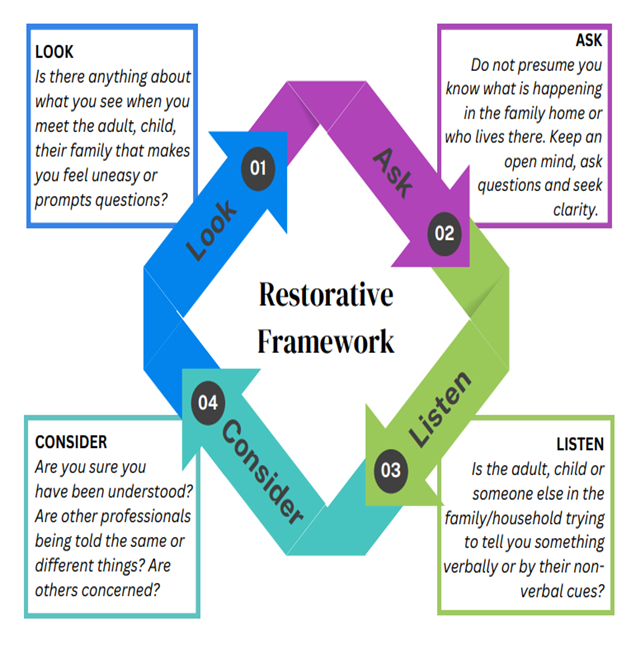
What to do - prompts and questions that might help you to be more professionally curious?
Prompts:
- Self-care and your own support
- Lacking confidence in challenging others regarding being professionally curious
- Deferring to the view of a senior colleague who may not be familiar with the case
- Time constraints
- Short term interventions
- Disguised compliance (people may downplay or draw attention away from concern to reduce professional involvement)
- Normalisation of behaviours rather than recognising risks present
- Professional confidence and optimism
- Being too optimistic about a case despite evidence of escalating risks
- Responding to each situation discretely
- Not recognising your own confirmation bias and ignoring information that refutes your view
- Having a ‘gut feeling’ that is based on knowledge and experience that something is not right, and wider social determinants of health e.g. housing and employment, protected characteristics and adverse childhood experiences.
What do you need to consider with professional curiosity work and protected characteristics?
The Equality Act 2010 ensures individuals have equal treatment access to public sector services. It is against the law to discriminate against someone because of a protected characteristic. Below are the nine protected characteristics as outlined in the Equality and Diversity Act (2010).
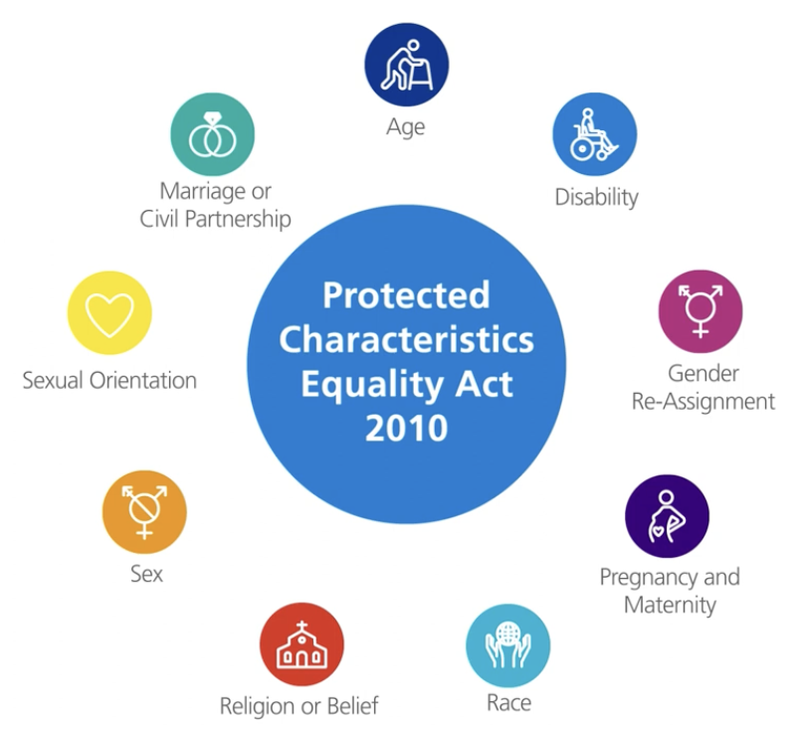
Some people may experience barriers to disclosing abuse and / or harm due to their protected characteristics, including:
- Older people experiencing domestic abuse but seeing this as “normal” throughout a long relationship.
- Disability - people in relationships their roles changing from being a mother / father / sibling or husband / wife to being a carer (informal or formal).
- Language barriers and/or cultural differences to seeking help, support and accessing services.
- A pregnant mother not wanting to disclose abuse due to social norms of being a “good” mother or fear of having a child taken away from her.
- Men reluctant to discuss abuse for fear of appearing “weak” or vulnerable due to society stereotypes of masculinity.
- Adultification- this is a type of bias which skews the perception of certain children, leading to professionals viewing them as more grown up than their peers which can lead to lapses in safeguarding and unfair treatment.
- Individuals and or groups who are not specially included in the 9 protected characteristics may still face discrimination. For example, due to socioeconomic status, sex work or appearance.
- Be aware of these barriers and consider what you need to do to support people experiencing any barriers and help get the support they need.
Resources
- www.anncrafttrust.org/professional-curiosity-safeguarding-adults-an-essential-introduction
- Re-envisaging professional curiosity and challenge: Messages for child protection practice from reviews of serious cases in England
- Multi-Agency Practice Guidance - Professional Curiosity - Devon Safeguarding Children Partnership
- Resources for professionals - SafeLives
- It’s OK to Ask – Maternity’s ground-breaking equity films - NHS Suffolk and North East Essex ICB
- Working definition of trauma-informed practice - GOV.UK
- nshcs.hee.nhs.uk/about/equality-diversity-and-inclusion/conscious-inclusion/understanding-different-types-of-bias
- journals.sagepub.com
- Adultification animation